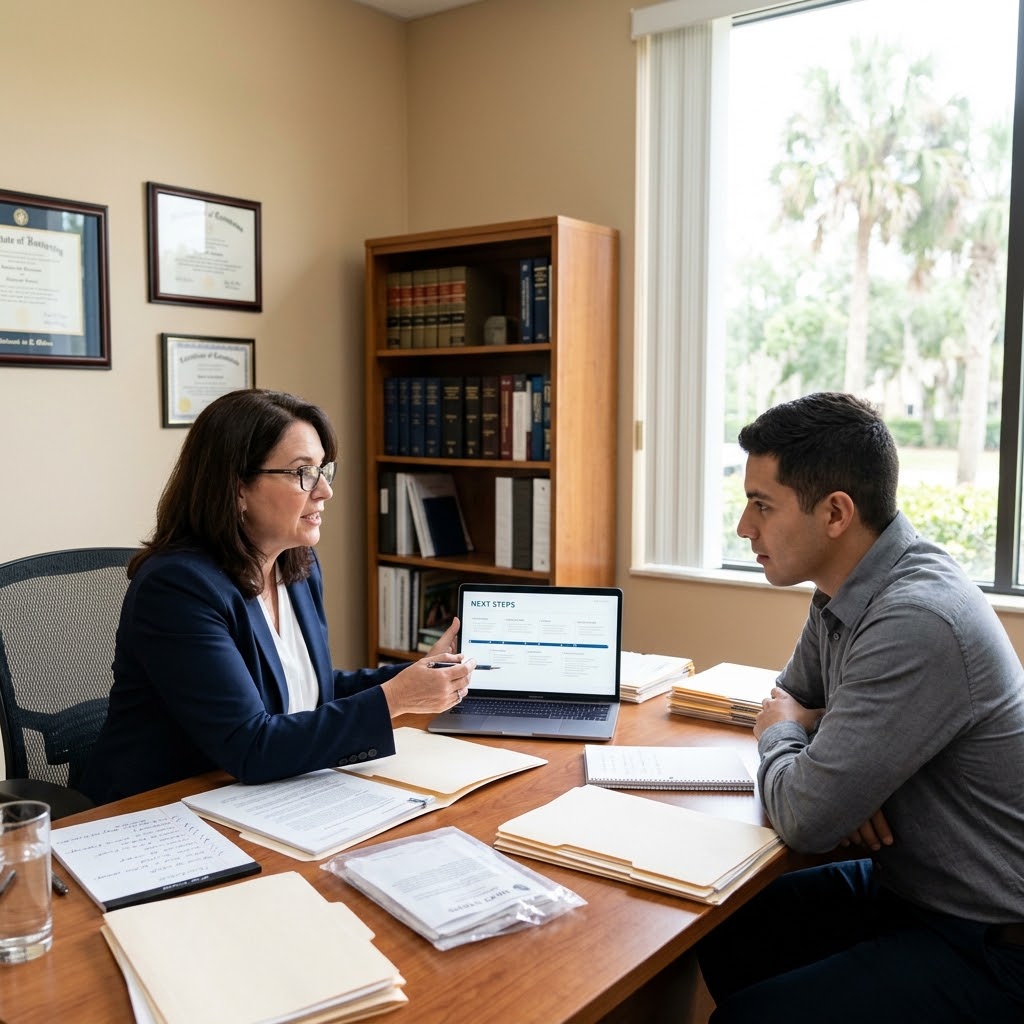
An immigration lawyer is an attorney who helps individuals, families, employers, and other clients understand and navigate U.S. immigration law. Depending on the circumstances of a case, an immigration attorney may assist with applications, petitions, immigration status, family-based processes, employment-related immigration, citizenship, or proceedings before an immigration court.
Because U.S. immigration law involves different forms, eligibility requirements, deadlines, and government agencies, legal guidance can be particularly useful when a case involves complex circumstances or potential legal issues.
An immigration lawyer in Orlando does not guarantee that an application or case will be approved. Instead, the attorney provides legal advice and representation based on the facts of the case and the applicable law.
Defining the Role: Attorney vs. Lawyer in U.S. Immigration Law
The terms “lawyer” and “attorney” are commonly used interchangeably in the United States. In the context of immigration law, what matters most is whether the person providing legal services is authorized to practice law.
Understanding the Legal Distinction
A person may complete law school and earn a law degree, but that alone does not authorize them to practice law. Attorneys generally must meet the licensing requirements applicable to the jurisdiction in which they are admitted to practice.
Immigration law is primarily federal law, which means attorneys admitted to practice in one U.S. jurisdiction may be able to represent clients in federal immigration matters beyond the state where they are licensed, subject to the applicable rules.
For this reason, prospective clients should verify that the person they hire is a licensed attorney authorized to provide the legal services they are seeking.
The Importance of Verifying an Attorney’s License
Checking an attorney’s licensing status is an important step when choosing legal representation.
Clients can generally use the relevant state bar or attorney regulatory authority to confirm whether a lawyer is authorized to practice and whether publicly available disciplinary information exists.
Verification does not guarantee that an attorney is the right fit for a particular case, but it helps distinguish licensed legal professionals from people who are not authorized to provide legal representation.
Who Can Provide Immigration Legal Services?
Immigration legal services may be provided by licensed attorneys and, in certain circumstances, by accredited representatives recognized through authorized nonprofit organizations.
Paralegals and legal assistants can work under the supervision of attorneys, but they generally cannot independently provide legal advice or represent clients as attorneys.
People seeking immigration assistance should be cautious about anyone who claims to be able to provide legal representation without the appropriate authorization.

Specialization in Immigration Law
Immigration law is a specialized area of federal law involving numerous visa categories, petitions, applications, immigration benefits, and removal proceedings.
An attorney who regularly handles immigration matters may have experience with the procedures and legal issues that commonly arise in these cases.
When choosing an immigration lawyer, it is useful to consider whether the attorney has experience with the specific type of immigration matter involved.
For example, an attorney who primarily handles family-based immigration may have a different practice focus from one who frequently represents clients in removal proceedings or employment-based cases.
Board Certification and Immigration Law
Some states have formal legal specialization or board certification programs. However, the availability and requirements of these programs vary by jurisdiction and area of law.
Board certification should not be presented as a universal requirement for practicing immigration law in the United States.
Similarly, membership in an immigration-law professional organization is not the same as being licensed or board-certified.
The most important initial step is to verify that the attorney is properly authorized to practice and then evaluate their relevant experience.
Why Relevant Experience Matters
Experience with cases similar to yours can help an attorney understand the legal and procedural issues that may arise.
For example, the considerations involved in a family petition may differ substantially from those involved in an immigration court proceeding, asylum application, naturalization case, or employment-based immigration matter.
A consultation can help determine whether the attorney’s practice is aligned with the type of immigration case you have.
Core Services Provided by an Immigration Attorney
Immigration lawyers can work on a wide range of matters. The services available depend on the attorney’s practice and the client’s circumstances.
Family-Based Immigration
Family-based immigration can involve petitions, immigrant visas, adjustment of status, and other immigration procedures.
Marriage and Green Card Applications
When a person seeks immigration benefits based on a marriage to a U.S. citizen or lawful permanent resident, the process may involve demonstrating that the qualifying relationship exists and meeting the applicable immigration requirements.
An attorney can explain the relevant process, review supporting documentation, and assist with the appropriate forms.
Depending on the circumstances, the process may involve adjustment of status inside the United States or consular processing outside the country.
Petitions for Relatives
U.S. citizens and lawful permanent residents may be able to petition for certain qualifying relatives, depending on the applicable immigration category.
Different categories have different eligibility requirements and, in some cases, visa availability and waiting periods.
An immigration attorney can explain the category that may apply and help clients understand the procedural steps involved.
Employment and Business Immigration
Immigration lawyers may also assist employers and foreign nationals with employment-related immigration matters.
Navigating Nonimmigrant Visas
Certain temporary employment categories require employer involvement and compliance with specific requirements.
Examples can include H-1B, L-1, and TN classifications, although eligibility requirements vary by category and individual circumstances.
An attorney can help determine whether a particular employment-based category may be appropriate and assist with the relevant petition or application process.
Employment-Based Immigration
Some foreign nationals may qualify for employment-based immigrant categories that can lead to lawful permanent residence.
Depending on the category, the process may involve employer sponsorship, labor certification, immigrant petitions, or other requirements.
Because employment-based immigration can involve several stages, legal advice can be useful when determining which process may apply.
Humanitarian Protection and Immigration Defense
Some immigration matters involve humanitarian protection or defense against removal.
Asylum
People who fear persecution or have experienced persecution based on legally recognized grounds may potentially qualify for asylum if they meet the applicable requirements.
An immigration lawyer can explain the asylum process, help identify relevant evidence, and assist with the preparation of an application or representation during applicable proceedings.
Asylum cases are highly fact-specific, and an attorney cannot guarantee that an application will be approved.
Deportation and Removal Defense
Individuals placed in removal proceedings may have the right to present defenses or seek forms of immigration relief for which they may qualify.
An immigration attorney can review the circumstances of the case, explain available legal options, and represent the client in eligible immigration court proceedings.
Possible forms of relief depend on factors such as immigration history, family circumstances, eligibility requirements, and the facts of the case.
Naturalization and Citizenship
Immigration attorneys can also assist lawful permanent residents who are considering U.S. citizenship through naturalization.
From Green Card to Citizenship
Naturalization involves specific eligibility requirements, which can include residence, physical presence, and other statutory requirements.
An attorney can review an applicant’s circumstances and identify questions that may need additional legal analysis before filing Form N-400.
Certain issues involving immigration history, criminal matters, travel, taxes, or other circumstances may require individualized legal advice.
Preparation for the Naturalization Interview
Naturalization applicants generally complete an interview as part of the process and may be required to complete English and civics tests unless an exception or accommodation applies.
An attorney can explain what to expect and help an applicant understand the information they will need to provide.
Legal representation does not guarantee that an applicant will pass the examination or receive citizenship.
Risks of Unlicensed Immigration Assistance
People seeking immigration help should understand the difference between authorized legal professionals and individuals who are not permitted to provide legal advice or representation.
Fraudulent or unauthorized immigration services can result in incorrect information, incomplete filings, unnecessary expenses, or other complications.
Understanding the Role of Notaries
The word “notario” can create particular confusion for Spanish-speaking immigrants.
In many Latin American countries, a notario may have legal functions that are different from those of a U.S. notary public. In the United States, a notary public generally does not have the authority to provide immigration legal advice merely because they are a notary.
A person should not assume that someone is an immigration lawyer because they use the title “notario” or offer immigration document services.
When legal advice is needed, verify that the person providing it is authorized to do so.
Avoiding Immigration Fraud
Warning signs may include promises of guaranteed approval, claims of special access to government officials, requests to provide false information, or pressure to sign documents that the applicant does not understand.
Applicants should provide truthful and complete information in immigration filings and should ask questions when they do not understand a document or legal requirement.
Potential Consequences of False Information
Providing false information or submitting fraudulent documents can create serious immigration problems.
The consequences depend on the facts and applicable law. In some circumstances, fraud or misrepresentation can affect eligibility for immigration benefits or create inadmissibility issues.
Because the consequences can be significant, anyone with concerns about previous statements, applications, or documents should consider obtaining individualized legal advice before submitting a new immigration application.
How Immigration Attorneys Handle Complex Cases
Immigration attorneys may do considerably more than complete forms. Depending on the case, they can analyze eligibility, review evidence, prepare legal filings, communicate with government agencies, and represent clients in immigration proceedings.
Evaluating Eligibility and Potential Immigration Issues
Before recommending an immigration process, an attorney may review relevant information such as:
- Current and previous immigration status.
- Prior applications and petitions.
- Entry and travel history.
- Family relationships.
- Employment history.
- Previous immigration proceedings.
- Criminal or legal history when relevant.
The purpose of this review is to identify issues that could affect eligibility and determine which legal options may be available.
Identifying Potential Waivers or Exceptions
Some immigration laws provide waivers or exceptions for specific circumstances. Whether one is available depends on the particular legal provision and the facts of the case.
An immigration lawyer can determine whether a potential waiver or exception should be considered and explain the applicable requirements.
A waiver does not guarantee approval, and not every immigration problem can be resolved through a waiver.
Determining the Appropriate Immigration Process
There may be more than one potential immigration process depending on an individual’s circumstances.
For example, certain cases may involve adjustment of status in the United States, while others may require consular processing.
An attorney can explain the differences between applicable options, including requirements, procedural steps, and potential legal concerns.
Documentation and Evidence Management
Immigration cases often require supporting evidence. The type and amount of documentation depend on the specific application or proceeding.
An attorney can help clients understand what evidence may be relevant and review documents for consistency with the information presented in the case.
Handling Requests for Evidence
USCIS may issue a Request for Evidence (RFE) when additional information or documentation is needed to adjudicate certain applications or petitions.
An immigration lawyer can review an RFE, explain what information is being requested, and assist with preparing an appropriate response when retained to do so.
The response must address the specific issues identified by the agency and comply with the applicable deadline.
Building a Legal Argument
Some immigration matters require more than documentary evidence. An attorney may prepare legal arguments, briefs, motions, or other filings depending on the type of case.
These documents can explain how the facts of a case relate to the applicable immigration laws and regulations.
The legal strategy depends on the circumstances and the specific proceeding.
Representation in Immigration Court
Immigration court proceedings are different from ordinary immigration applications filed with USCIS.
Appearing Before Immigration Judges
An immigration attorney may represent a respondent during eligible immigration court proceedings.
Depending on the case, representation can involve preparing applications for relief, filing motions, presenting evidence, making legal arguments, and responding to the government’s position.
The specific procedures depend on the type and stage of the proceeding.
Immigration Appeals
Some immigration court decisions may be subject to review or appeal under applicable rules.
An attorney can determine whether an appeal or other form of review may be available and explain the applicable deadlines and procedures.
Not every decision can be appealed in the same manner, so legal advice should be based on the specific case.
Choosing the Right Immigration Lawyer
Choosing an immigration attorney involves more than searching for someone who handles immigration law.
Verifying Credentials and Experience
Start by confirming that the attorney is licensed and authorized to practice.
Then consider:
- Experience with your type of immigration case.
- Experience with similar legal issues.
- The attorney’s communication process.
- Who will actually handle your case.
- The services included in the legal fee.
- Additional costs that may arise.
- The firm’s approach to case updates and client communication.
Checking the Attorney’s Licensing Status
Use the appropriate state bar or attorney regulatory authority to verify the attorney’s current license.
Because immigration law is federal, also ask the attorney about their experience handling the particular type of immigration matter you have.
Licensing verification is an important first step, but it should be combined with an evaluation of the attorney’s experience and suitability for your case.
Assessing Immigration Experience
Ask whether the attorney regularly handles cases similar to yours.
For example, an attorney may focus on family-based immigration, employment-based immigration, citizenship, asylum, deportation defense, or several areas.
Relevant experience can be more useful than simply choosing a lawyer based on the number of years they have practiced law.
Questions to Ask During an Immigration Consultation
A consultation can help you understand how an attorney approaches your situation.
Consider asking:
- What type of immigration process may apply to my situation?
- What potential issues should I be aware of?
- What documents will I need?
- Who will handle my case?
- What services are included in the legal fee?
- What additional expenses should I expect?
- How will I receive updates about my case?
- What happens if USCIS requests additional evidence?
- What are the potential risks or uncertainties in my case?
Avoid choosing an attorney solely because they promise a specific result. Immigration cases depend on the facts, applicable law, and decisions made by government agencies or courts.

Bilingual Immigration Legal Services
For many immigrants and families, being able to communicate comfortably with their attorney is an important part of the legal process.
The Angel Law Firm states that its attorneys and staff provide assistance in English and Spanish. The firm provides immigration legal services in Orlando and Central Florida and lists several areas of immigration law among its services.
Its listed immigration matters include deportation defense, family petitions and visas, adjustment of status, citizenship and naturalization, immigration court matters, Temporary Protected Status (TPS), employment authorization, immigrant visas, consular processing, LGBTQ immigration, DACA, and VAWA.
The firm also states that Attorneys Mercado and Roeckell are personally involved in processing cases and handling legal matters.
Frequently Asked Questions
What is an immigration lawyer?
An immigration lawyer is a licensed attorney who provides legal advice and representation related to U.S. immigration law. Depending on the attorney’s practice, they may assist with immigration applications, family petitions, employment-based immigration, citizenship, humanitarian matters, or immigration court proceedings.
What does an immigration lawyer do?
An immigration lawyer can review a client’s circumstances, explain applicable immigration requirements, prepare or review legal documents, assist with evidence, and provide representation in eligible immigration matters.
Is an immigration lawyer the same as an immigration attorney?
In the United States, “lawyer” and “attorney” are commonly used interchangeably. The important distinction is whether the individual is authorized to practice law.
Do I need an immigration lawyer?
Not every immigration matter requires an attorney. However, legal assistance may be useful when a case involves complicated eligibility questions, previous immigration issues, immigration court proceedings, or other circumstances that require individualized legal analysis.
Can a notary provide immigration legal advice?
A U.S. notary public does not become an immigration lawyer simply by being a notary. Individuals who need legal advice should verify that the person providing the service is authorized to practice immigration law.
Can an immigration lawyer guarantee my case will be approved?
No. An attorney can provide legal advice and representation, but no lawyer can guarantee that USCIS, an immigration court, or another government authority will approve a particular case.
How do I choose an immigration lawyer?
Verify the attorney’s license, look for experience with cases similar to yours, understand the services and fees, and ask how the attorney will communicate with you and manage your case.
Final Thoughts
An immigration lawyer is a licensed legal professional who can help individuals, families, and employers understand and navigate U.S. immigration law.
The appropriate level of legal assistance depends on the circumstances of each case. Before hiring an attorney, verify their credentials, consider their experience with your type of immigration matter, understand the services they provide, and ask questions about fees, communication, and potential legal issues.
For people looking for an immigration lawyer in Orlando, these steps can help them make a more informed decision about the legal representation they need.