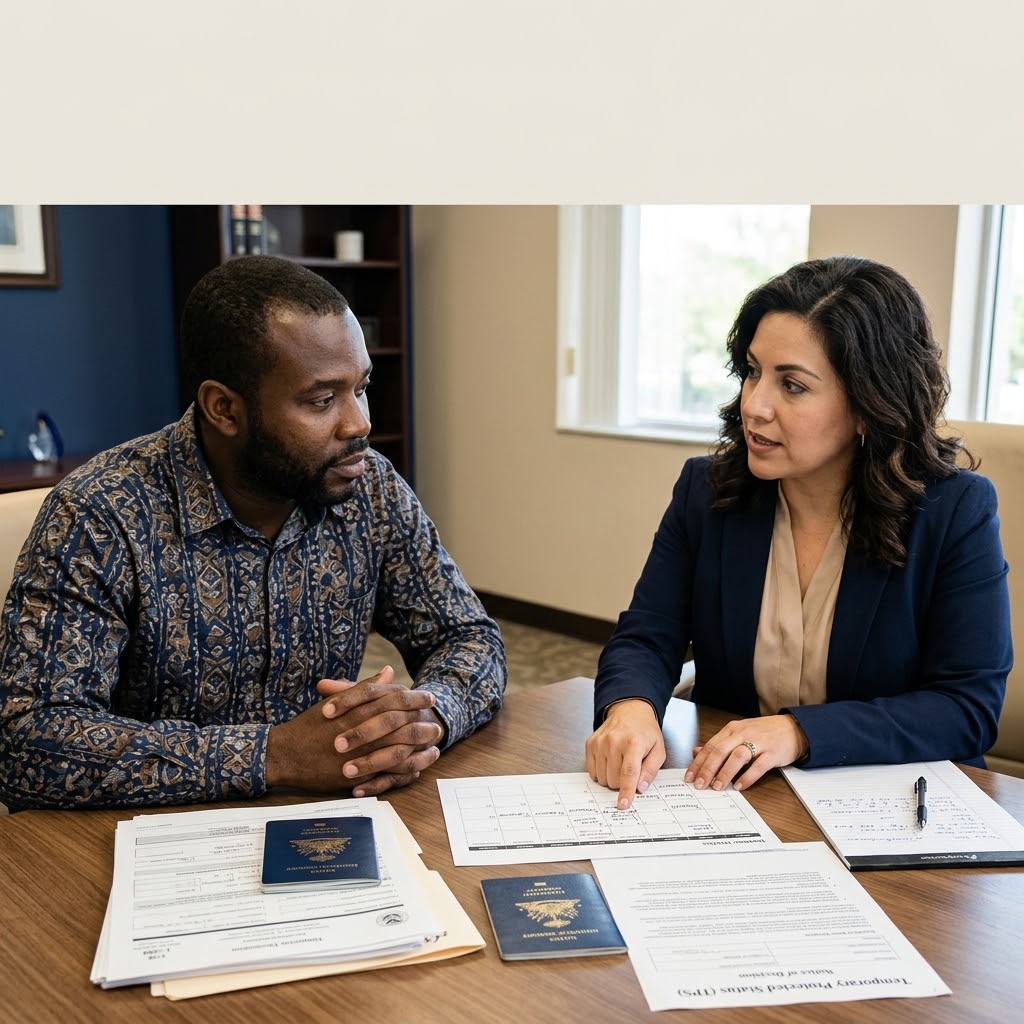
Temporary Protected Status (TPS) is a temporary immigration benefit granted to nationals of countries facing armed conflict, natural disaster, or other extraordinary conditions, and it carries work authorization and protection from removal for as long as the designation lasts. As of September 22, 2026, three TPS countries hold a designation with a published date: Ukraine, Sudan, and Lebanon. El Salvador sits in a category of its own.
The expiration date on El Salvador’s last extension came and went on September 9, 2026, with no termination announced. More than 200,000 people are now protected, employed, and without a calendar. Here is what the official source says today, which TPS countries are still designated, and what the law provides for anyone who wants to be ready before the announcement lands.
What Does USCIS Say About El Salvador Right Now?
U.S. Citizenship and Immigration Services (USCIS), the agency that administers immigration benefits, keeps a one-line alert on its El Salvador page: an announcement on El Salvador’s TPS will be made at the appropriate time, and until that announcement is made, Salvadorans present in the United States under TPS retain protection, including work authorization.
That sentence is the entire framework in effect. No Federal Register notice has terminated or extended the designation, and no new registration window is open. What exists is an extension in practice, with no published end date.
The designation dated back to 2001, after the earthquakes of that year, and renewed every 18 months for more than two decades. The last extension was published on January 17, 2025, and ran from March 10, 2025, through September 9, 2026. That calendar is the one now on hold.
Confirm the status before making any decision, because it changes through official notices and it changes overnight. The source is the official USCIS TPS page, not a news story or a forwarded message.
Which Countries Still Have TPS Right Now?
Three designations carry a published date as of September 22, 2026. Ukraine and Sudan both terminate on October 19, 2026. Lebanon runs through November 27, 2026. El Salvador stands apart, in the holding pattern described above.
| Country | Status as of September 22, 2026 | Key date
|
|---|---|---|
| El Salvador | No announcement: protection and work authorization continue | Pending a USCIS announcement |
| Ukraine | Designated, with a scheduled termination | October 19, 2026 |
| Sudan | Designated, with a scheduled termination | October 19, 2026 |
| Lebanon | Designated | November 27, 2026 |
| Haiti | Terminated | Ended July 27, 2026 |
| Venezuela | Both designations terminated | Work authorization for a specific group through October 2, 2026 |
The list of TPS countries was close to a dozen at the start of 2025. The Haiti and Syria terminations took effect on July 27, 2026, and the two Venezuelan designations closed in October and November of 2025, though a court order kept employment authorization documents valid for a specific group of people through October 2, 2026.
What Changed With the Supreme Court Ruling in June 2026?
On June 25, 2026, in Mullin v. Doe, the Supreme Court held that federal courts are barred by statute from reviewing nonconstitutional challenges to the Homeland Security Secretary’s decisions to designate, extend, or terminate TPS. The ruling reversed the district court orders that had paused several terminations.
In practice, that closed the door that used to buy time. A lawsuit could previously keep a designation alive for months. The ruling leaves constitutional claims outside its reach, but that is a narrow and slow path.
For a single family, the consequence is about the calendar. If the announcement on El Salvador arrives and it is a termination, waiting for a judge to freeze it is no longer a reasonable plan. The useful time is the time you have now.
What Options Does the Law Provide If a Designation Ends?
The end of a designation does not mean nothing is left. It means protection stops being automatic and starts depending on an application you file, with its own requirements and deadlines. Four paths come up most often.
A family petition through a U.S. citizen spouse, parent, or child is filed on Form I-130 (Petition for Alien Relative) and, depending on the case, can continue with adjustment of status inside the country or with consular processing.
Asylum is filed on Form I-589 (Application for Asylum and for Withholding of Removal) and carries a general one-year deadline from your last arrival. The regulation recognizes an exception when a person held TPS until a reasonable period before filing, which matters for anyone who never applied because they were already protected.
Cancellation of removal is requested only before an immigration judge, inside a case that has already started, and requires continuous physical presence, good moral character, and exceptional hardship to a qualifying relative. Victim-based relief, such as a U visa or VAWA, applies when a crime or domestic violence is part of the history.
Which path fits depends on the facts of your case: your entry date, your record, your family, and your immigration history. None of them starts on its own, and filing the wrong one can cost more than filing nothing.
What Should You Do While You Wait for the Announcement?
Start with documents. Your most recent TPS approval notice, your work permit, proof of entry and continuous residence in the United States, and every notice you have received from USCIS or from a court. Without that file, no serious evaluation is possible.
Next, check whether anyone in your immediate family is a U.S. citizen or lawful permanent resident. That single fact changes the picture more often than any other, and it is the first thing an attorney will look at.
And if you have ever been arrested, even on a minor charge and even if the case was closed, say so at the first meeting. In immigration matters a record changes the options on the table, and finding out late is the most expensive mistake in the process.

Frequently Asked Questions About TPS Countries and Designation Dates
Can I keep working while there is no announcement?
Under the alert USCIS has posted, Salvadorans with TPS retain protection and work authorization until an announcement is made. Confirm the status of your document on the official page before presenting it to an employer, because the date printed on the card does not always match the notice in effect.
Is there an open re-registration window for El Salvador?
No new registration period has been published for El Salvador. Re-registration opens through Federal Register notices, with specific and short windows. Paying for a filing outside that window buys no protection, and it is a common charge from people who are not attorneys.
Does a termination automatically place me in deportation proceedings?
Not automatically. Termination leaves a person without that protection and without work authorization, and exposes them to a case being filed. Starting one requires Immigration and Customs Enforcement (ICE) to issue a Notice to Appear and file it with the immigration court, which opens removal proceedings.
Does time spent with TPS count toward a green card?
Time with TPS is authorized presence while the designation lasts and can matter for certain filings, but on its own it does not grant permanent residence or a direct path to it. Its actual effect depends on how you entered the country and which application you pursue.
What if my country is on the list of TPS countries but the date is in October?
If you are a national of Ukraine or Sudan, termination is scheduled for October 19, 2026, and Lebanon for November 27, 2026. Treat that window as working time: review now which other filing might apply, instead of waiting for the date to arrive.
Talk to an Attorney Before the Announcement Arrives
If you already have a hearing date or a notice in hand, time works against you. At Angel Law Firm, you speak with an attorney about your case from the first consultation. Call (407) 329-7711 or reach our Orlando office to review your options.
The Wait Is Preparation Time, Not a Pause
While no announcement exists, the protection holds and so does the work permit. That calm has an unknown expiration date, and that is the risk. Temporary protection did its job for 25 years, but the solid defense is the one built through your own filing, on time. Whichever of the TPS countries you come from, pull your file together, confirm who in your family could petition for you, and get a legal evaluation now, while there is still room to choose the path.
This content is for general information only. It is not legal advice and does not create an attorney-client relationship. Every case depends on its own facts and on the law in effect when it is filed. To discuss your situation, contact Angel Law Firm at (407) 329-7711.